Wheeler History
A Legacy Of Excellence: The Wheeler Equipment Story
leg·a·cy /ˈleɡəsē/: something of value that is handed down or conveyed from one person to another.
ex·cel·lence /ˈeks(ə)ləns/: the quality of being outstanding or extremely good.
Historians detail the timing and impact of the four industrial revolutions that have impacted and transformed the world as we know it today. The first was characterized by the emergence of mechanization… the transition from hand production methods to that of machines. This era was dominated by the invention and use of the steam engine.
Towards the end of the 19th century, the second of these revolutions was championed by the emergence of new energy sources, that being electricity and gasoline and the development of the combustion engine. This heralded an era of mass production.
Nearly a century later, the third industrial revolution appeared with the emergence of nuclear energy and the rise of electronics. Today we are witness to the impact of the internet and artificial intelligence. Historians will refer to this as revolution number four.
It is often debated as to which one of these revolutionary periods was the most dramatic and life altering. Many would agree that a combination of era one and two may hold the most impact on what we, in the so-called industrialized world, have achieved and are accomplishing.
Capitalizing on Change
 Getting in on the trailing edge of revolution number one and the leading edge of number two was Seattle, Washington-based, Washington Iron Works, a company under the guidance of president J.W. George and general manager J.M. Frink.
As a result of the region's railway, steamship and milling interests, Seattle was fast becoming known as the Pittsburgh of the west. The demands of industry in the region, coupled with the excellence of product produced, saw the Washington Iron Works quickly grow. In1883 with fifty employees… W.I.W. melted over 1,000 tons of iron in the foundry and the machine shop finished three mill engines, one logging locomotive, eight steamboat engines and a large amount of custom work.
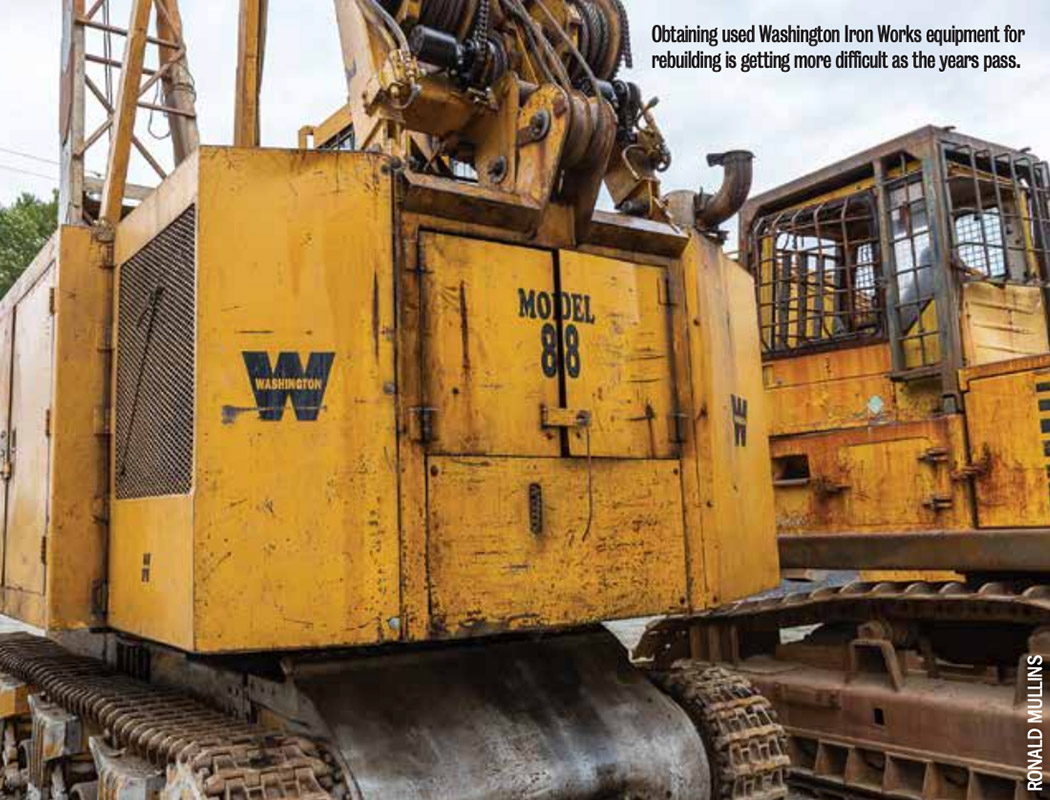
Frink was the man largely responsible for perfecting the logging engine or steam donkey. The "Washington" logging engine and winch system was the recognized industry standard, and it was used not only in Washington, Oregon and British Columbia but also in Alaska, the Philippines, Burma (Myanmar), India and, in fact wherever there were logs to harvest and move.
Washington Iron Works capitalized on the industrial changes of the era, and the equipment they designed and built became the 'gold standard' demanded by companies and contractors around the world. The business flourished, building steam engines or donkeys, ship engines, railroad cars, logging yarders and whirly cranes for the maritime industry. They were a manufacturing force to be reckoned with.
Additionally, their steam-skidders, cranes and high-lead and skyline cable systems were used in forest and logging operations up and down the west coast of the U.S. and Canada and around the world.
As well, their cranes and cable systems, some of the largest ever built, were instrumental in the construction of the Hoover Dam and, a bit closer to home and years later, the Revelstoke, British Columbia hydro electric project.
As a result of a downturn in the economy and an evolving industrial landscape, the company began selling off its assets in the 1980's and extinguished all fire in its furnaces and closed the doors for good in 1986.
Closer to Home
 Meanwhile, in 1976, a young man by the name of Stuart Wheeler started his heavy-equipment mechanics apprenticeship with Howe Sound Timber. This Squamish, British Columbia-based, premier-forestry company, owned and operated three of the industry standard Washington TL-6 Trakloaders. "That was my introduction to Washington Iron Works and their machines," stated Wheeler in a recent interview. "I worked for Howe Sound for a few years, then was recruited by Washington Iron Works and worked for them until the company closed."
Upon dissolution, Washington Iron Works Canadian operations were purchased by British Columbia-based TriCan Machinery, and Stuart Wheeler returned home and was hired on by them. Regrettably the market turned again and TriCan was forced to close its doors, but not before they had acquired all the plans and drawings for everything that Washington Iron Works had designed and/or built.
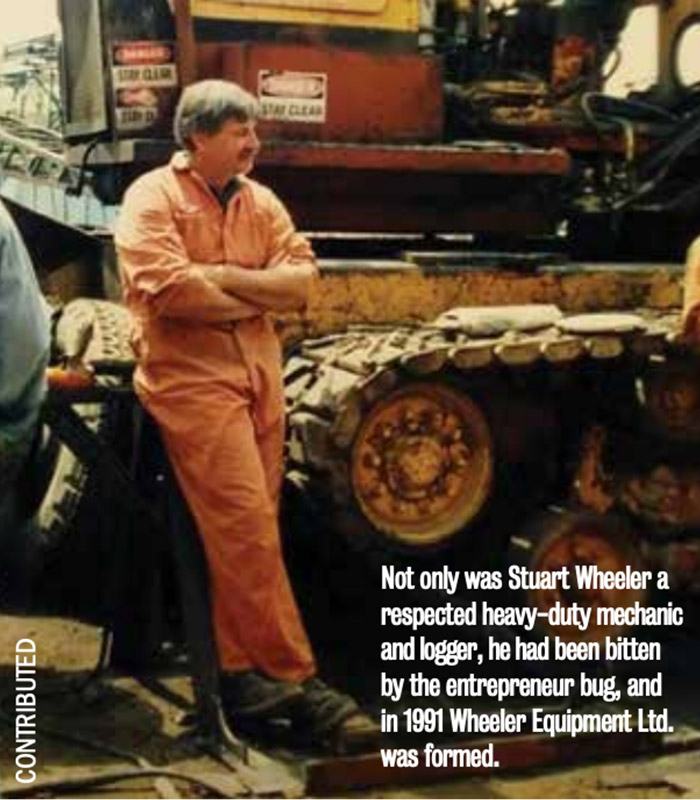
Not only was Stuart Wheeler a respected heavy-duty mechanic and logger, he had been bitten by the entrepreneur bug, and in 1991 Wheeler Equipment Ltd. was formed. First up, he purchased all of the Washington Iron Works Intellectual Property and Plans from the now defunct TriCan Machinery, that is all 460,000 plans and drawings…all on microfilm. There was so much material to go through that Wheeler had to hire someone whose only job was to digitize and catalogue everything just so anyone could find it. "I even have plans and drawings for steam engines and steam locomotives, so I'll be okay should their popularity ever return," Wheeler said with a big smile.
But owning the plans and drawings does not a business make. Stuart had to go out and find the business. Fortunately, he was well known and highly respected in the forest industry, and there was a goodly number of Washington forestry machines and yarders either working or parked in the Pacific Northwest as well as Washington cranes on coastal log barges and in the local recycling or reclamation yards…all of which needed parts and repair. Although the first few years were slow, as with almost any business startup, Stuart Wheeler was off to a good solid start.
Today, Wheeler Equipment Ltd. is flourishing with up to 20 employees and its own 20,000 plus square foot manufacturing facility on River Road in Delta, British Columbia.
Extended Family
But 'business family' can be more than just a biological relationship. Such is the case with the 'family' at Wheeler Equipment. For example, Robbie Dove, the company's parts manager, and Ross Dowling, shop manager, both have a long and varied relationship with Stuart Sr. and his family, and the common cord that ties them all together… Washington Iron Works.
In Robbie's case, he and Stuart worked together at Washington Iron Works as well as at Vancouver Equipment. Then Dove became part owner of TriCan Machinery and he hired Stuart Sr. as a key heavy duty mechanic.
As time passed, Stuart Sr. left TriCan to form his own company but when TriCan closed he was quick to contact Robbie and insist that he come and work for him. Robbie Dove had a big smile on his face when asked about that experience, "It's been great. Kind of a wild ride, but great. Stuart has built a solid company and it's wonderful to be a small part of it."
Dowling's story is much the same. He worked for Stuart in the 1990's, left to form his own company, did some contract work for Wheeler, and, "One day out of the blue, Stuart called and said he needed a shop manager and asked if I was interested. I said yes… and that was a number of years ago. Stuart is a great guy to work for either as a supplier or as an employer."
Changes And The Future
In business everything is always changing… almost on a daily basis. It has often been said that if a business if it is not changing and moving forward, it is slipping backward…there is no standing still. If you could ask all those associated with Washington Iron Works and TriCan Machinery in the past, they would likely agree whole heartedly. That is not the case with Wheeler Equipment Ltd.
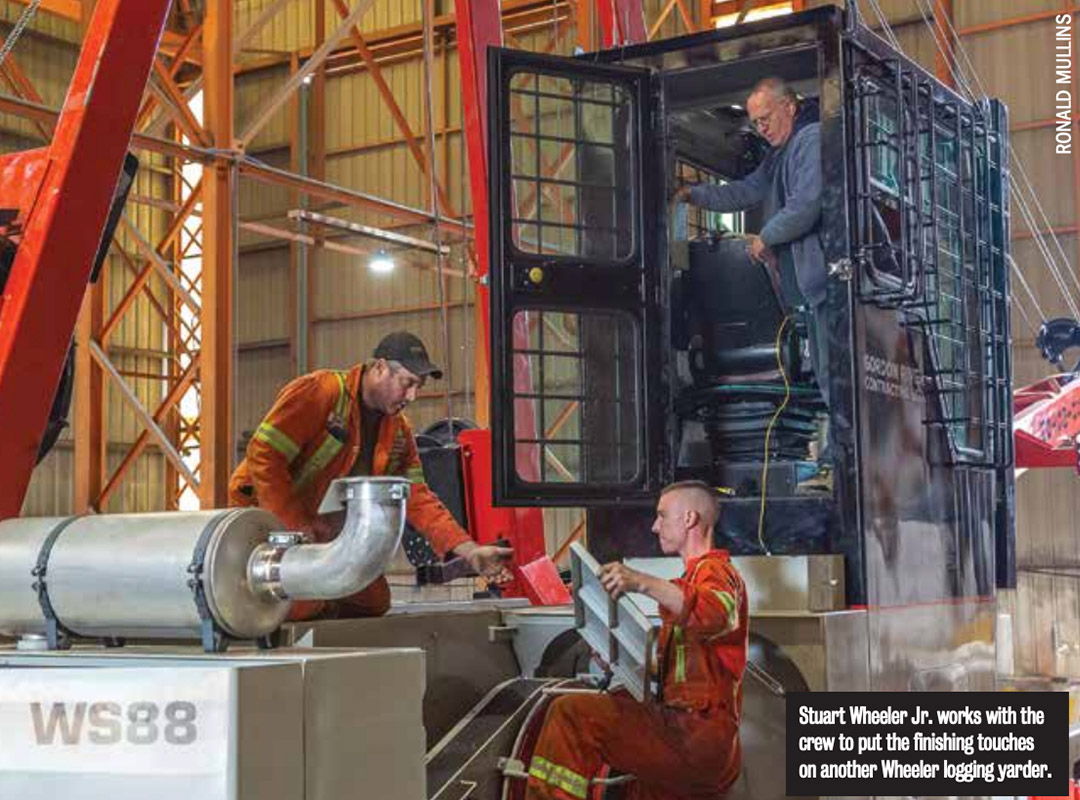
Yes in the grand scheme of things they are a small player…but they are constantly evolving and moving forward using excellence in design and manufacture as well as exemplary customer service be their guide. They are adding new equipment, most recently a plasma cutter allowing them to fabricate many of the parts needed to maintain, refurbish or build-from-the-ground-up a wide variety of heavy-duty cranes, cable systems and logging equipment.
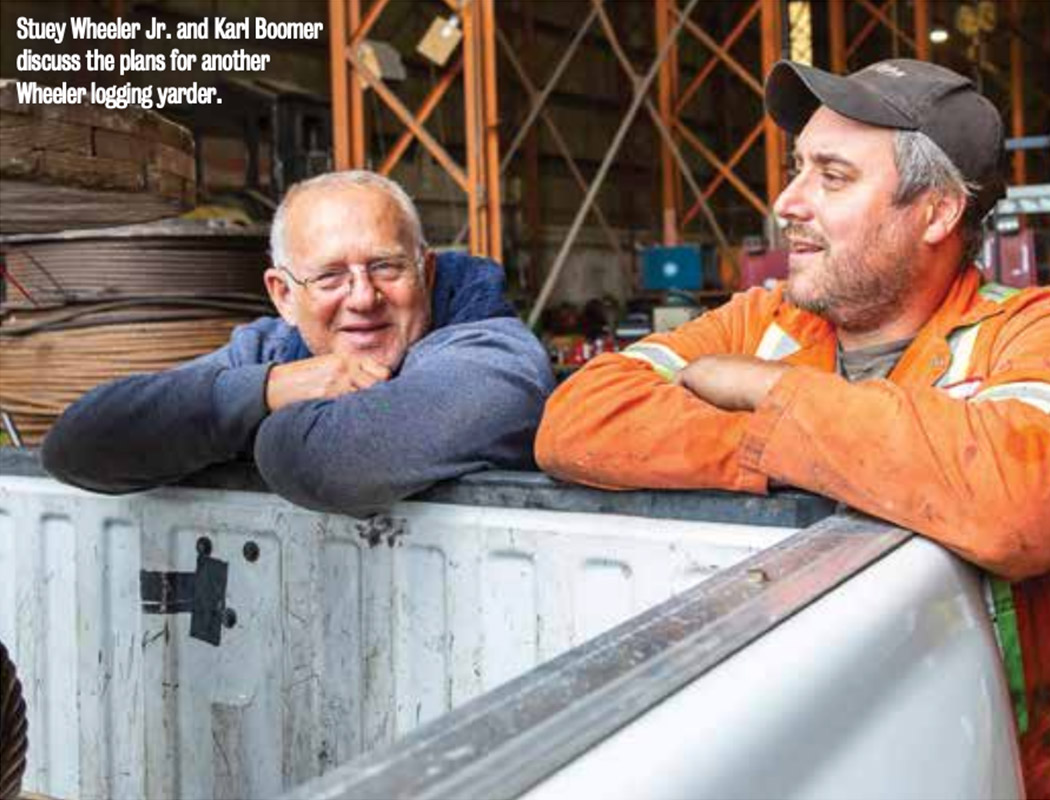
Recently, Stuart Sr. and the Wheeler Equipment family-team finished and delivered a Wheeler/Washington Super 88 Swing Yarder to Karl Boomer and his Vancouver Island-based Gordon River Contracting. Boomer was extremely pleased when he picked up the keys and had the machine delivered to his Qualicum, B.C., operation. "Stuart and I worked very closely to achieve this result," he stated. "This machine will be instrumental in keeping my family's business in the forefront of logging in British Columbia. Stuart and his team have done a terrific job."
Also currently going through the 'build' process at Wheeler's Delta, British Columbia, shop is a brand new, built-from-the-ground-up drag-line excavator for Manitoba-based Nelson River Construction.
There are Wheeler refurbished machines working up and down the west coast of North America, in Alaska, Manitoba, Quebec and New Zealand. It's an exciting time at the Wheeler Equipment shop on River Road in Delta, British Columbia, but along with that excitement comes many challenges.
The key element that made Washington Iron Works the giant success that they became was excellence. Excellence in planning, design, manufacturing, maintenance and customer service. These same principals of excellence have brought success to Stuart Wheeler Sr. and the Wheeler Equipment Ltd. team for almost four decades, and Stuart Wheeler Jr. will see that this Legacy of Excellence is carried through well into the future.
For further information on Wheeler Equipment Ltd. or to find out what they can build or maintain for you visit www.wheelerequipment.com or call either Stuart Wheeler Sr. or Stuart Wheeler Jr. at 1-604-882-9995.

EVERY NUT, EVERY BOLT – WE FIX EVERYTHING
Make Wheeler Your First Choice For Re-manufacturing & Heavy Equipment Repair.
Check out WHEELEREQUIPMENT.COM